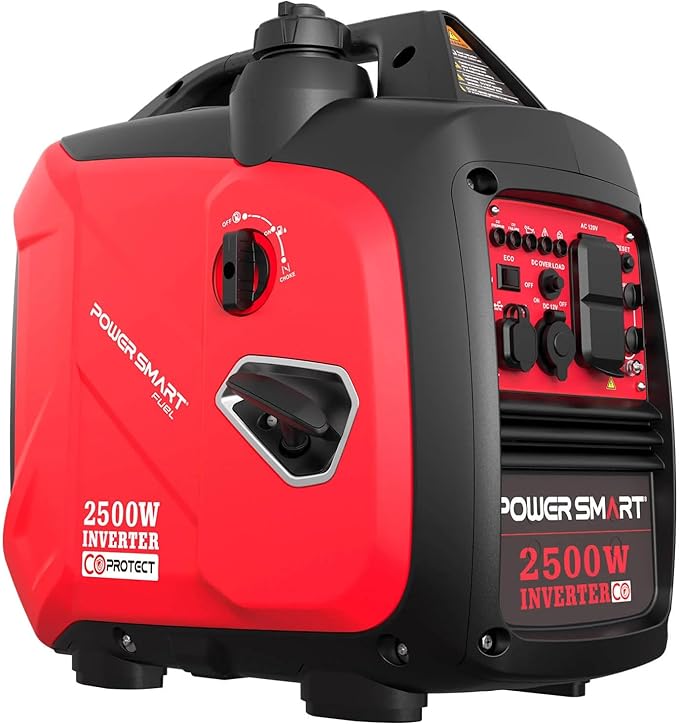
In 2026, affordable portable power options make it easier to stay connected during camping trips, tailgating, outdoor projects, and short power outages. Depending on what you need to run, a small gasoline generator or a portable power station can provide useful backup power without the size and cost of a larger home generator.
Below, you’ll find five affordable portable power options, including a small gasoline generator and several compact battery power stations. I’ve included the key specifications that matter when comparing them, such as output, battery capacity, portability, charging options, and intended use.
Affordable Portable Generators and Power Stations
| Product | Type | Output / Capacity | Best For | Amazon |
|---|---|---|---|---|
| PowerSmart Gas Powered Portable Generator 1200W | Gas generator | 1,200W peak / 1,000W running | Camping and small outdoor loads | Check Amazon Price Click Here! |
| PowerSmart 1200-Watt Portable Generator PS50 | Gas generator | 1,200W class | Basic portable power | Check Amazon Price Click Here! |
| MARBERO Portable Power Station 88Wh | Battery power station | 88.8Wh / 80W rated, 120W peak | Phones, lights, small electronics | Check Amazon Price Click Here! |
| BailiBatt Portable Power Station 300W | Battery power station | 300W / 257Wh | Camping and small electronics | Check Amazon Price Click Here! |
| FF FLASHFISH 200W Portable Power Station | Battery power station | 200W / about 151Wh | Small electronics and short-term backup | Check Amazon Price Click Here! |
PowerSmart Gas Powered Portable Generator 1200W
The PowerSmart 1200W portable generator is a small gasoline-powered option for basic outdoor power. The current PS50/DB5010 specifications list 1,200 watts of peak output and 1,000 watts of running power. It uses a 71cc two-stroke engine and weighs about 39 pounds, so it is portable enough for camping, tailgating, and small outdoor jobs, although it is considerably heavier than a battery power station.
- Fuel: Gasoline with 50:1 gasoline-to-oil mix
- Peak Output: 1,200W
- Running Output: 1,000W
- Noise: 49 dB at 23 feet
- Weight: 39 lbs
- Runtime: Up to 5 hours at 50% load
- Best For: Camping, tailgating, lights, chargers, and small tools
Why Choose It: This is worth considering if you need more continuous output than a small battery power station can provide and don’t mind carrying gasoline and managing a two-stroke fuel mixture.
PowerSmart 1200-Watt Portable Generator PS50
This second PowerSmart listing appears to represent the same 1,200W-class PS50 generator family, so buyers should check the Amazon listing carefully for the exact model number and included equipment before purchasing. The current PowerSmart specifications for the PS50/DB5010 list 1,200W peak output, 1,000W running output, 49 dB at 23 feet, and a 39-pound weight.
For shoppers comparing the two PowerSmart listings, the model number is more useful than the product title alone. Amazon listings can change over time, so check the specifications and package contents shown on the listing before placing an order.
- Peak Output: 1,200W
- Running Output: 1,000W
- Fuel: Gasoline
- Engine: 71cc two-stroke
- Noise: 49 dB at 23 feet
- Weight: About 39 lbs
- Best For: Camping, tailgating, lights, chargers, and small tools
Why Choose It: This option makes sense for buyers who want a compact gasoline generator for basic loads and are comfortable with the additional fuel and maintenance requirements of a gas-powered unit.
MARBERO Portable Power Station 88Wh
The MARBERO 88Wh Portable Power Station is designed for small electronics rather than high-wattage appliances. The current model provides 88.8Wh of battery capacity, with 80W of rated output and up to 120W peak output. At about 3.2 pounds, it is much easier to carry than a gasoline generator and makes more sense for phones, lights, tablets, and other low-power devices.
- Battery Capacity: 88.8Wh
- Rated Output: 80W
- Peak Output: 120W
- Weight: About 3.2 lbs
- Battery Type: Lithium-ion
- Best For: Phones, tablets, lights, and other low-power electronics
- Charging: AC charging; solar versions are available depending on the package
Why Choose It: Its small size and low weight make it useful when portability matters more than high output. It is better viewed as a compact battery power station than as a replacement for a gasoline generator.
BailiBatt Portable Power Station 300W
The BailiBatt HP200D is a compact 300W portable power station with a 257Wh lithium battery and a listed weight of 4.6 pounds. It includes two 120V pure-sine-wave AC outlets and a 12V/120W DC output. The unit is designed for small electronics and outdoor use, while the total connected load must remain within its 300W output limit.
- Battery Capacity: 257Wh
- Rated Output: 300W
- Weight: 4.6 lbs
- AC Output: 120V pure sine wave
- DC Output: 12V/120W
- Best For: Camping, laptops, phones, cameras, lights, and other small electronics
- Solar Charging: Accessories sold separately
Why Choose It: Its combination of 257Wh capacity, 300W output, and 4.6-pound weight makes it more versatile than an ultra-small power bank while remaining easy to carry.
When using a power station for equipment such as a CPAP machine, check the CPAP’s actual power requirements, expected runtime, and whether a humidifier or heated tubing will be used. A 300W output rating alone does not guarantee a specific runtime for medical equipment.
FF FLASHFISH 200W Portable Power Station
The FF FLASHFISH 200W Portable Power Station is a compact battery-based option for users who need to charge small electronics away from an outlet. The E200 documentation lists a 151Wh battery, 200W rated AC output, and a weight of about 4.07 pounds. It also supports AC, car, and compatible solar charging, depending on the charging equipment used.
- Battery Capacity: About 151Wh
- AC Output: 200W
- Weight: About 4.07 lbs
- DC Output: Up to 12V/10A
- Best For: Phones, tablets, lights, cameras, and other small electronics
- Charging Options: AC, car, and compatible solar input
Why Choose It: The 200W output and compact design make this type of power station useful for charging electronics and running other relatively low-power devices during camping trips, travel, or short-term power interruptions.
Keep in mind that a 200W power station is not intended to replace a larger generator for high-demand appliances such as refrigerators, large power tools, space heaters, or air conditioners.
How to Choose an Affordable Portable Generator or Power Station
When comparing an affordable portable generator or power station, focus on the specifications that actually affect how you will use it.
1. Calculate Your Power Needs
Check both the running watts and starting watts of anything you plan to connect. Motors in refrigerators, pumps, tools, and other appliances can require considerably more power when they start.
For battery power stations, also pay attention to watt-hours (Wh). Wattage tells you what the unit can run, while watt-hours give you a better idea of how much energy the battery stores.
2. Choose Between Gasoline and Battery Power
Gasoline generators can provide continuous power as long as you have fuel available, but they produce exhaust and require outdoor operation.
Battery power stations are quiet and produce no exhaust while operating, but their runtime depends on battery capacity and the power draw of the connected devices.
For occasional camping and electronics, a small power station may be enough. For tools or equipment requiring substantially more continuous power, a gasoline generator may be more appropriate.
3. Consider Weight and Carrying Distance
A 3- to 5-pound battery power station is much easier to carry to a campsite than a 39-pound gasoline generator.
If the power source will stay near a vehicle, weight may matter less. If you’re carrying it any distance, every pound becomes more noticeable.
4. Check Noise Ratings
If you’ll be camping near other people, compare the manufacturer’s noise rating and make sure you understand the measurement conditions.
Don’t assume that a generator advertised as “quiet” will be silent. Gasoline generators still produce engine noise, while battery power stations operate without an internal combustion engine.
5. Look at Charging Options
Battery power stations may support AC wall charging, vehicle charging, and solar charging.
Check whether a solar panel or car cable is actually included or sold separately. A “solar-compatible” power station does not necessarily include a solar panel.
If you plan to rely on solar charging during a trip, check the supported solar input and make sure the panel you use is compatible with the power station.
6. Check Weather and Storage Requirements
Portable generators and power stations are not automatically weatherproof.
Follow the manufacturer’s instructions for rain, moisture, storage, and operating conditions. Gasoline generators should be kept in a dry outdoor location with adequate clearance from structures.
A power station should also be protected from excessive moisture, extreme temperatures, and physical damage.
Portable Generator Safety
Gasoline generators require more care than battery power stations because they produce carbon monoxide (CO), an odorless and potentially deadly gas.
The CDC recommends operating portable generators outdoors, at least 20 feet away from windows, doors, and vents, with exhaust directed away from the building. Never operate a gasoline generator inside a home, garage, basement, or other enclosed space, even if doors or windows are open.
It is also a good idea to have a battery-powered or battery-backup carbon monoxide detector inside the home.
Keep the generator dry, follow the manufacturer’s instructions, and use appropriately rated outdoor extension cords when needed.
If you’re using a generator during a power outage, position it before connecting appliances and keep fuel stored according to local requirements and the manufacturer’s instructions.
Final Thoughts
The right affordable portable power option depends on what you actually need to run.
A small gasoline generator such as the PowerSmart PS50 can provide substantially more continuous output than the compact battery stations in this list, but it requires gasoline, produces exhaust, and must be used outdoors with proper clearance.
Battery power stations such as the MARBERO 88Wh, BailiBatt HP200D, and FF FLASHFISH 200W are better suited to phones, lights, laptops, cameras, and other relatively low-power electronics. They are quieter, easier to carry, and produce no exhaust while operating.
Before buying, compare running watts, peak watts, battery capacity, weight, charging options, and the actual devices you need to power. Also check the current Amazon listing for the exact model and included accessories because product specifications, packages, and prices can change over time.
For 2026, the biggest mistake is not necessarily choosing a cheaper or more expensive unit. It is buying a power source that does not match the wattage, runtime, portability, or safety requirements of your intended use.