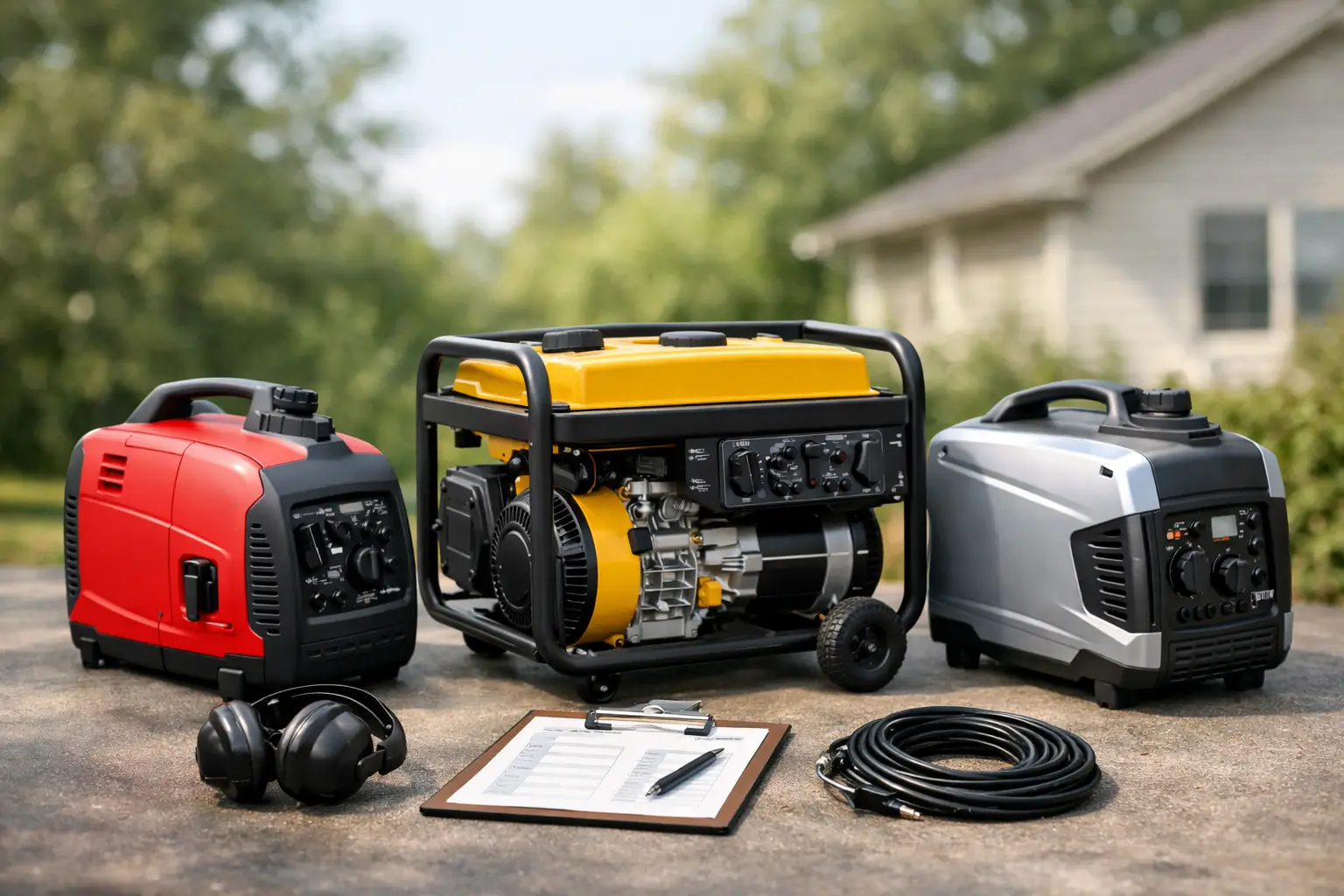
A generator that starts easily but cannot run your well pump, RV air conditioner, or refrigerator is not a bargain. The point of a generator brands comparison is not to find one universal winner. It is to identify the manufacturer whose strengths fit the way you actually need power – whether that means quiet camping weekends, a few essentials during an outage, or whole-home backup.
Brand reputation matters, but it should come after the basics: required running and starting watts, fuel type, portability, noise limits, and service support in your area. A premium inverter generator can be the right call for an RV owner and a poor fit for a homeowner who needs 240-volt power for a well pump. Start with the job, then compare brands.
Generator Brands Comparison: What Really Separates Them
Most established generator brands overlap in the middle of the market. Several sell portable inverter generators, open-frame conventional models, and dual-fuel options. The meaningful differences usually show up in engine quality, inverter performance, outlet configuration, transfer-switch readiness, warranty terms, parts availability, and how well a company supports the product after the sale.
A useful comparison also separates portable generators from standby systems. A portable unit can provide flexible, lower-cost backup power when used outdoors with proper extension cords or an approved inlet connection. A standby generator is permanently installed, connected to fuel and a transfer switch, and designed to start automatically. Comparing a Honda EU2200i directly with a Generac Guardian standby unit would not tell you much because they solve entirely different problems.
Honda: Premium portable reliability and quiet operation
Honda remains a benchmark for portable inverter generators. Models such as the EU2200i are known for clean power, low noise, strong fuel efficiency, and a long-standing reputation for dependable small engines. For campers, RV owners, and homeowners who want to keep electronics, a refrigerator, and a few lights running, Honda is often among the safest premium choices.
The trade-off is price. Honda units usually cost more than similarly rated models from value-focused brands, and their compact inverter lineup is not built for high-demand 240-volt home loads. You are paying for refinement, portable reliability, and broad parts familiarity, not maximum wattage per dollar.
Honda makes the most sense when quiet operation, portability, and long-term ownership confidence matter more than getting the largest possible generator for the budget.
Yamaha: A close alternative for quiet inverter power
Yamaha occupies a similar premium lane. Its inverter generators are respected for stable power output, efficient engines, and quiet operation. A Yamaha inverter is especially worth considering if you want a polished RV or recreation generator but find a model with a better local dealer, available inventory, or a feature package that suits your setup.
There is less of a dramatic difference between Yamaha and Honda than marketing sometimes suggests. Both are strong choices for sensitive electronics and noise-conscious use. Compare the specific model’s rated watts, weight, parallel capability, outlet selection, and warranty rather than assuming one badge is automatically better.
Champion: Versatility and strong value
Champion has earned a following by offering practical features at accessible prices. The lineup includes inverter generators, conventional open-frame models, dual-fuel units, and portable models with 120/240-volt capability. A
Champion dual-fuel inverter can be particularly appealing for RV use or emergency preparedness because propane stores longer than gasoline and can be easier to manage during a storm.
Champion is a strong option for buyers who want features such as electric start, remote start, CO shutoff, parallel capability, or dual-fuel operation without moving into premium-brand pricing. The company also offers many models that suit occasional home backup.
The compromise is that fit and finish, long-term refinement, and noise control can vary more across the lineup than they do with premium inverter specialists. Check the exact model rather than relying on the brand name alone. A 2,500-watt Champion inverter and a large open-frame Champion dual-fuel generator serve very different users.
Westinghouse: High-output portable backup options
Westinghouse is frequently a practical choice for homeowners looking for substantial portable backup capacity. Its WGen series and dual-fuel models often deliver high running wattage, multiple outlet types, electric start, and transfer-switch-friendly 120/240-volt output at competitive prices.
For a home that needs to run a refrigerator, freezer, sump pump, furnace blower, microwave, and selected lighting circuits, a Westinghouse portable generator can offer more usable capacity per dollar than a smaller premium inverter. Models such as the WGen9500DF are aimed at this kind of outage planning, provided you verify the surge needs of motor-driven appliances.
These generators are larger and louder than suitcase-style inverters. They also require a realistic fuel plan, secure outdoor placement, and safe connection methods. If your neighborhood has strict noise expectations or you need to carry the generator into an RV compartment, Westinghouse’s larger open-frame offerings may not be the right match.
Generac: Standby leadership and broad home-backup support
Generac is one of the best-known names in residential standby power. Its Guardian series is designed for homeowners who want automatic backup power during utility outages. With professional installation, an automatic transfer switch, and a natural gas or propane supply, a standby system can restore selected circuits or much of the home without dragging out cords and refueling a portable unit.
That convenience comes with a larger commitment. Standby generator sizing involves electrical load calculations, local permitting, fuel-supply capacity, placement clearance, and professional installation. Generac also sells portable units, but its clearest advantage is its extensive standby ecosystem and home-backup focus.
Choose Generac when automatic operation is the goal and the budget supports a permanent system. It is less compelling if you only need a generator a few times a year for camping, tailgating, or a short outage.
DuroMax and Firman: Feature-rich power for budget-focused buyers
DuroMax and Firman often appeal to buyers who need high wattage, dual-fuel flexibility, or 240-volt output without standby-generator pricing. DuroMax models such as the XP13000HX are commonly considered for portable home backup and jobsite use because they offer substantial capacity and a heavy-duty form factor.
Firman also competes strongly in warehouse-club and retail channels with dual-fuel and inverter options that can represent good value. Both brands can be sensible picks when the generator will see occasional or moderate use and the buyer is prepared to follow a maintenance schedule closely.
The decision here should be more model-specific. Confirm local service options, replacement-part access, weight, stated noise level, and the exact power rating when running on propane. Dual-fuel units typically produce less power on propane than on gasoline, which can matter if your load calculation is close to the generator’s limit.
Compare by Use Case Before Comparing Logos
For camping and modest RV use, quiet inverter brands such as Honda, Yamaha, Champion, and Westinghouse are usually the best starting point. An inverter generator produces cleaner, more stable power for laptops, chargers, and modern RV electronics. It is also easier to live with at a campground, where noise can quickly become a problem.
For portable home backup, prioritize 120/240-volt output, enough surge capacity for motor loads, and a safe connection plan. Westinghouse, Champion, DuroMax, and larger Generac portable models are common candidates. A generator inlet and
manual transfer switch installed by a qualified electrician are safer and more convenient than trying to run a house through loose extension cords. Never connect a generator directly to a wall outlet or utility panel without an approved transfer method.
For
automatic whole-home backup, Generac is a natural first brand to evaluate, alongside other professionally installed standby options available through local dealers. The best system is sized around the loads you want to carry, not just the square footage of the house.
For jobsites and mobile work, consider durability, 240-volt receptacles, fuel run time, wheel kit quality, and serviceability. Quiet inverters are helpful around customers, but an open-frame generator may deliver better value when high starting wattage and heavier tools are the priority.
Do Not Let Peak Watts Make the Decision
Manufacturers advertise starting watts because they are impressive, but running watts are what determine how much equipment a generator can support continuously. A refrigerator may need a brief surge to start, while a space heater draws its full rated wattage the entire time it runs. Air conditioners, well pumps, sump pumps, and compressors deserve special attention because startup demand can be significant.
Build a simple load plan before you shop. List the appliances or circuits you need, identify their running watts and estimated starting watts, and avoid planning to operate at the generator’s absolute limit. Leaving capacity in reserve improves reliability and gives you room for an unexpected load.
Also compare fuel consumption at 25 percent and 50 percent load, not only tank size. A larger tank can mean longer run time, but it also makes a portable generator heavier and does not eliminate the need for safe fuel storage.
Ownership Support Can Matter More Than a Small Price Difference
A generator becomes valuable when it starts after months of sitting. That depends on ownership habits as much as brand choice. Use fresh stabilized gasoline when appropriate, run the unit periodically under load, check the oil, and follow the manufacturer schedule for air filters and spark plugs. If you choose propane, inspect hoses and fittings and understand the reduced output rating.
Before purchasing, look beyond online star ratings. Review the warranty, nearby repair options, replacement parts, included accessories, and whether the outlet configuration matches your intended connection. A low-priced model without a practical path to service may cost more frustration than it saves.
The right brand is the one that fits your required power, fuel plan, noise tolerance, and ownership habits. Buy enough generator for the loads that matter, set it up safely outdoors, and test your plan before the next outage turns preparation into an emergency.